


Description
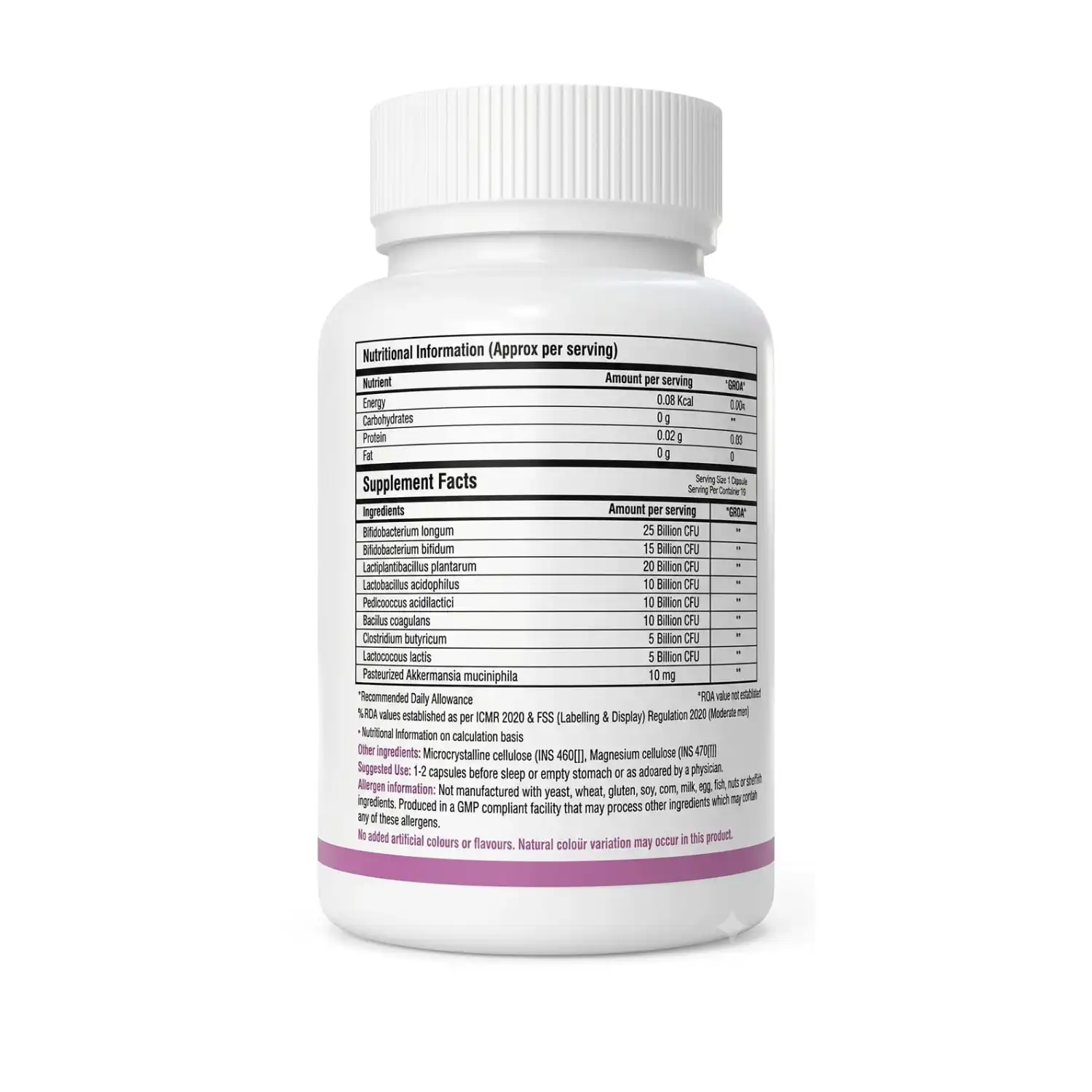
AIC Renal Biota Care is a targeted, high-potency probiotic formulation designed to support the gut-kidney axis through a combination of 9 selected probiotic strains providing 100 Billion CFU. It focuses on oxalate metabolism, endotoxin load, phosphorus metabolism, uremic toxin reduction, and renal inflammation, treating the gut as the main cause of the advancement of chronic kidney disease.
Key Ingredients
- Bifidobacterium longum (25 Billion CFU): Reduces indoxyl sulfate & p-cresol; gut barrier; mood & anxiety in CKD. Supports a balanced intestinal microbiome and gut barrier function.
- Bifidobacterium bifidum (15 Billion CFU): Lowers endotoxin load; reduces kidney inflammatory burden; restores mucosal IgA. Supports beneficial gut bacteria, mucosal health and immune balance.
- Lactobacillus plantarum (20 Billion CFU): Decreases oxalate absorption; reduces TNF-α & IL-6; improves lipid profile.
- Lactobacillus acidophilus (10 Billion CFU): Supports digestive health, microbial balance and normal intestinal function. Decreases urea & nitrogenous waste; improves digestion.
- Pediococcus acidilactici (10 Billion CFU): Supports beneficial microbial balance and healthy digestive function. Suppresses toxin-forming microbes; improves phosphorus metabolism.
- Bacillus coagulans (10 Billion CFU): Reduces inflammation; improves bowel regularity for toxin elimination.
- Clostridium butyricum (5 Billion CFU): Supports butyrate production — reduces systemic inflammation, protects kidney epithelial cells, improves mitochondrial function in renal tissue.
- Lactococcus lactis (5 Billion CFU): Supports beneficial microbial activity and intestinal barrier function. SCFA production; restores tight junctions; reduces leaky gut-driven kidney injury
- Pasteurized Akkermansia muciniphila (10 mg): Strengthens mucin layer; reduces endotoxin crossing; improves glucose control.
Key Indications
Useful for individuals with:
- Chronic Kidney Disease (CKD) – as adjunctive gut microbiome support under practitioner supervision
- Gut Dysbiosis Associated With CKD
- Elevated Gut-Derived Uremic Toxin Burden
- High Urinary Oxalate / History of Calcium Oxalate Kidney Stones
- Intestinal Permeability / Gut Barrier Dysfunction
- Chronic Constipation or Irregular Bowel Movements
- CKD-Associated Digestive Discomfort
- Renal Inflammatory Patterns
- Oxalate-Related Gut or Metabolic Concerns
- Dialysis or Pre-Dialysis Patient
Recommended Dosage
1–2 capsules at night (2 hours after dinner) or empty stomach.
Why Choose This Product?
- Targeted 9-strain formulation
- 100 Billion CFU
- Addresses multiple aspects of gut-kidney health
- Suitable for practitioner-guided functional medicine protocols
FAQs
The gut-kidney axis describes the two-way relationship between the intestinal microbiome, gut barrier and kidney function. In CKD, changes in the gut microbiome may contribute to increased production and accumulation of gut-derived uremic toxins and inflammatory compounds.
Certain probiotics may influence gut microbial composition and the production or metabolism of gut-derived compounds. Clinical studies have investigated probiotics and synbiotics for their effects on markers such as BUN and uremic toxins, although results vary and probiotics should be considered adjunctive support rather than a treatment for CKD.
Renal Biota Care may be used as adjunct gut health support alongside dialysis under nephrologist supervision. It is not a replacement for dialysis or prescribed renal medications. Discuss with your nephrologist before starting — particularly regarding potassium and phosphorus monitoring.
Because CKD patients may be taking multiple medications, supplements should be reviewed with the treating nephrologist or healthcare professional before use. This is particularly important for patients with advanced CKD, dialysis or kidney transplantation.
A regular probiotic is formulated for general gut health. Renal Care is formulated specifically for the gut-kidney axis — every strain selected for its documented role in reducing uremic toxins, lowering renal inflammatory burden, improving oxalate and phosphorus metabolism or protecting kidney tissue. It is a clinically targeted formula, not a repurposed general probiotic.
Bowel regularity and digestive improvement: 1-2 weeks. Measurable reduction in uremic toxin burden and gut barrier improvement: 4-6 weeks. Sustained gut-kidney axis benefit and inflammatory reduction: 3 months of consistent use.
Yes — Renal Biota Care is specifically designed for practitioner-guided functional medicine, nephrology and integrative medicine protocols. It is most effective as part of a comprehensive CKD management approach that includes dietary oxalate reduction, protein moderation, phosphorus management and regular monitoring of renal function markers.
- Vaziri ND et al. (2013). Chronic kidney disease alters intestinal microbial flora. Kidney International.- Demonstrated that CKD significantly disrupts gut microbiome composition — reducing beneficial bacteria and increasing toxin-producing species. Directly supports the rationale for targeted probiotic intervention in CKD management.
https://pubmed.ncbi.nlm.nih.gov/23325083/ - Nallu A et al. (2017). Gut microbiome in chronic kidney disease: challenges and opportunities. Translational Research.
Histamine and histamine intolerance. American Journal of Clinical Nutrition.
https://pubmed.ncbi.nlm.nih.gov/27187081/ - Ranganathan N et al. (2010). Probiotic dietary supplementation in patients with stage 3 and 4 chronic kidney disease: a 6-month pilot scale trial in Canada. Current Medical Research and Opinion.
6-month clinical trial showing probiotic supplementation in Stage 3-4 CKD patients reduced blood urea nitrogen, creatinine and inflammatory markers — providing direct clinical evidence for probiotic use in CKD management at the stages most relevant to Renal Care users.
https://pubmed.ncbi.nlm.nih.gov/20001408/ - Plovier H et al. (2017). A purified membrane protein from Akkermansia muciniphila or the pasteurized bacterium improves metabolism in obese and diabetic mice. Nature Medicine.
Landmark study confirming that pasteurized Akkermansia retains full bioactive potency — improving gut barrier integrity, reducing endotoxin translocation and improving glucose metabolism. Directly supports the use of pasteurized Akkermansia in Renal Care over less stable live forms.
https://pubmed.ncbi.nlm.nih.gov/27892954/ - Rossi M et al. (2012). Synbiotics easing renal failure by improving gut microbiology (SYNERGY). BMC Nephrology.
Clinical trial demonstrating that synbiotic supplementation measurably reduced uremic toxin burden and improved gut microbiome composition in CKD patients — validating the combined probiotic approach used in Renal Care.
https://pubmed.ncbi.nlm.nih.gov/22458280/ - Nakabayashi I et al. (2011). Effects of synbiotic treatment on serum level of p-cresol in haemodialysis patients. Nephrology Dialysis Transplantation.
Showed significant reduction in serum p-cresol levels — a major uremic toxin — following Bifidobacterium-containing synbiotic supplementation in dialysis patients. Directly supports the 25 Billion CFU B. longum dose as the highest-priority strain in Renal Care.
https://pubmed.ncbi.nlm.nih.gov/21059739/ - Campieri C et al. (2001). Reduction of oxaluria after an oral course of lactic acid bacteria at high concentration. Kidney International.
Demonstrated that high-concentration Lactobacillus supplementation significantly reduced urinary oxalate excetion — supporting L. plantarum’s role in Renal Care for oxalate metabolism and kidney stone risk reduction in CKD.
https://pubmed.ncbi.nlm.nih.gov/11380828/ - Liu J et al. (2020). Butyrate reduces kidney inflammation and protects against renal injury in CKD. Journal of Renal Nutrition.
Established butyrate as a direct renoprotective molecule — reducing renal tubular inflammation, protecting kidney epithelial cells and improving mitochondrial function in renal tissue. Validates Clostridium butyricum’s critical role in Renal Care.
https://pubmed.ncbi.nlm.nih.gov/32067886/





Reviews
There are no reviews yet.