

Table of Contents:
- Introduction
- Why Magnesium Matters For Your Health & Energy
- Which Magnesium Is Best For Your Symptom?
- Types of Magnesium Supplements and Their Benefits
- How to Choose the Best Magnesium Supplement for You
- Magnesium Dosage and Safety Guidelines
- Best Natural Food Sources of Magnesium
- Bottom line - Choosing the Right Magnesium Supplements
- Magnesium FAQ
- References
Anita had been tossing and turning for weeks. Work stress was high, her muscles ached after working out, and no matter how much she rested, the exhaustion wouldn’t go away. A friend suggested magnesium. But when she visited an online shop to purchase it, she saw a wall of options. Citrate? Glycinate? Malate? She was so overwhelmed by the variety available, she quite felt like learning a new language.
If you’ve ever been in Anita’s shoes, this guide is for you.
This guide will explain the different forms of magnesium. You will learn why one magnesium form doesn’t fit for all and how to choose the best magnesium supplement according to your symptoms to support your well-being.
Why Magnesium Matters For Your Health & Energy
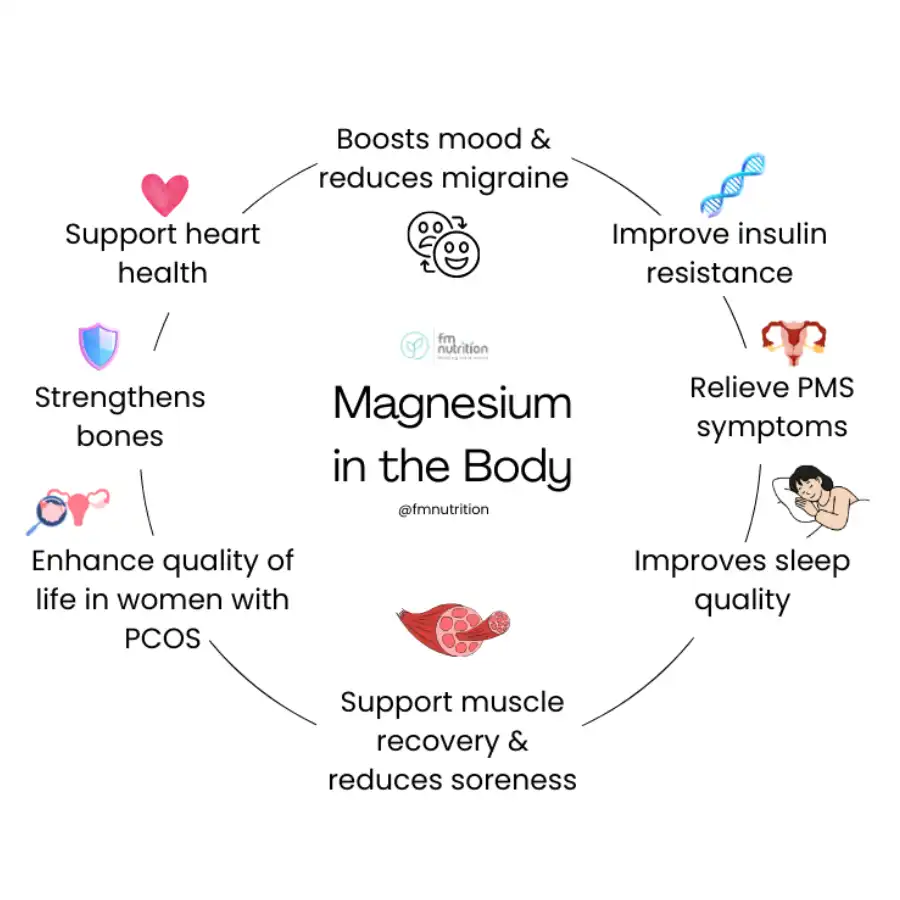
Magnesium is one of the most essential minerals in the body and the fourth most abundant mineral overall. It acts as a critical cofactor for over 300 enzymatic reactions, supporting everything from energy production to nervous system balance.
Magnesium plays a vital role in:
- Energy production (ATP synthesis)
- Muscle contraction and relaxation
- Nerve signaling and stress regulation
- Bone strength and mineralization
- Heart health and blood sugar regulation
- DNA & RNA synthesis
- Protein synthesis
- Immune system function
Despite its importance, magnesium deficiency is surprisingly common due to magnesium depletion in soil, modern diets, chronic stress, poor absorption, and increased nutrient demands. Ensuring adequate magnesium intake is essential for optimal body function and long-term well-being.
Here's a closer look at key functions magnesium performs:
- Energy Production: The body uses magnesium as a major component to create energy. It plays a significant role as a cofactor in a number of metabolic processes, including the use of ATP.
- Muscle Function: Magnesium helps muscles relax after contraction. Low levels may lead to cramps, spasms, stiffness, and post-exercise soreness.
- Nerve Function: Magnesium is an essential mineral for nerve transmission. It helps calm down an overactive nervous system.
- Bone Health: Magnesium contributes to bone structure and works alongside calcium and vitamin D for bone strength.
- Heart Health and Blood Sugar Regulation: Magnesium supports healthy blood pressure, heart rhythm, and insulin sensitivity.
Which Magnesium Is Best For Your Symptoms?
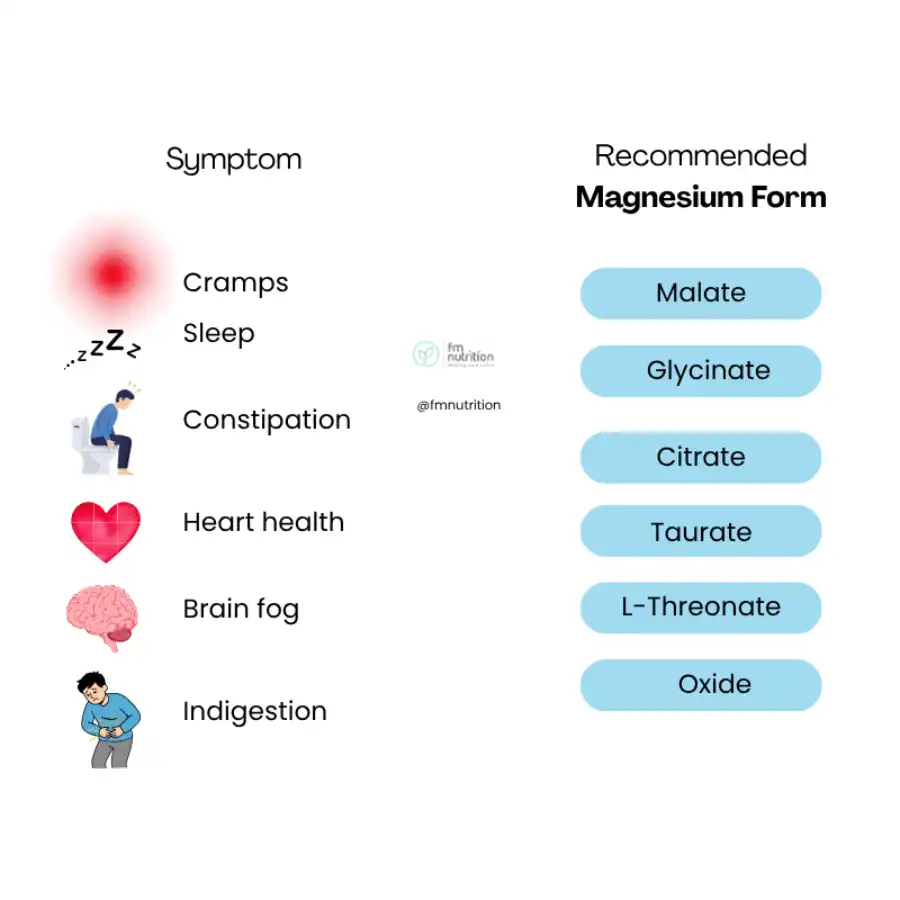
Your symptoms often provide clues about which form of magnesium your body needs most.
- Best Magnesium for Muscle Cramps and Spasms: Magnesium malate
Muscle cramps and spasms are frequently caused by low magnesium levels. Magnesium malate helps muscle recovery and reduces muscle soreness. It helps release the tension in the muscles. Also linked to improved energy production. - Best Magnesium for Sleep Problems and Anxiety: Magnesium glycinate
Magnesium is important for optimal nerve function. It helps regulate neurotransmitters. Magnesium glycinate provides a relaxation and calming effect on the nervous system, inducing better sleep, and you will wake up feeling more rested. The additional benefit is that it is gentle on the stomach. - Best Magnesium for Constipation: Magnesium citrate
Because of its osmotic properties, magnesium citrate draws water into the intestines, softening the stool and facilitating bowel movements. It helps relieve constipation because of its laxative properties. - Best Magnesium for Heart Health: Magnesium taurate
Taurine, an amino acid, supports cardiovascular function. Taurine and magnesium work together to support healthy blood pressure and healthy cardiovascular function. - Best Magnesium for Brain Health and Cognition: Magnesium L-Threonate
Magnesium L-Threonate has a special capacity to penetrate the blood-brain barrier and improve cognitive function. It helps sharpen the memory, focus, and alertness and is useful for long-term brain health. - Best Magnesium for Indigestion: Magnesium Oxide
By buffering the excess stomach acid, Magnesium Oxide acts as an antacid and reduces indigestion symptoms - Magnesium for Muscle relaxation and Stress Relief (Bath/Topical use): Magnesium sulphate (Epsom salts)
Absorbed through the skin during a warm soak, these forms help ease muscle soreness and promote relaxation.
Types of Magnesium Supplements and Their Benefits
Each form of magnesium has unique absorption and uses. Let’s explore the different forms of magnesium.
Magnesium Glycinate:
- Highly absorbable.
- Gentle on the stomach.
- Good for sleep, anxiety, and muscle relaxation.
Magnesium Citrate:
- Good absorption.
- Mild laxative effect.
- Useful for constipation.
Magnesium Oxide:
- High elemental magnesium
- Lower absorption. Useful for Heartburn and indigestion issues. Works as an antacid.
Magnesium L-Threonate:
- Crosses the blood-brain barrier.
- Supports cognitive function and mood.
Magnesium Malate:
- Good absorption.
- Supports energy production.
- Helpful for fatigue and muscle pain.
Magnesium Taurate:
- Supports cardiovascular function.
- Helps regulate Blood pressure
How to Choose The Best Magnesium Supplement For You
Magnesium comes in different forms, but the key is choosing the one that aligns with your symptoms and health goals. Once your objective is clear, selecting the right magnesium becomes straightforward.
Quick Checklist for Choosing Magnesium
- Identify your primary symptom or wellness goal and match it with the most suitable form.
- Opt for a highly bioavailable form to ensure better absorption.
- Begin with a low dose to assess tolerance and watch for any side effects.
- Consult your doctor if you have specific health needs or medical conditions.
Magnesium Dosage and Safety Guidelines
The recommended dietary allowance (RDA) for the majority of adults is:
For men: 400–420 mg/day
For Women: 310–360 mg/day
Tolerable Upper Intake Level (UIL) of Magnesium for adults is: 350mg/day
Note: The upper limit applies to magnesium from supplements, not food sources.
(Consult your healthcare physician about the ideal magnesium dosage if you are pregnant and magnesium-deficient)
A gentle reminder– More isn’t always better. Too much can cause stomach upset, nausea, cramping, diarrhoea, or other issues.
Expert Tip/Expert Insights- “Not all magnesium deficiencies show up on routine blood tests. Symptoms like muscle cramps, poor sleep, anxiety, fatigue, or constipation may appear long before lab values change. Choosing the right form based on symptoms often matters more than choosing a high dose.” – Dr. Ruhi Agarwala
Best Natural Food Sources of Magnesium
While supplements are helpful, they cannot replace a nutrient-rich diet. Ideally, supplements should complement magnesium-rich foods.

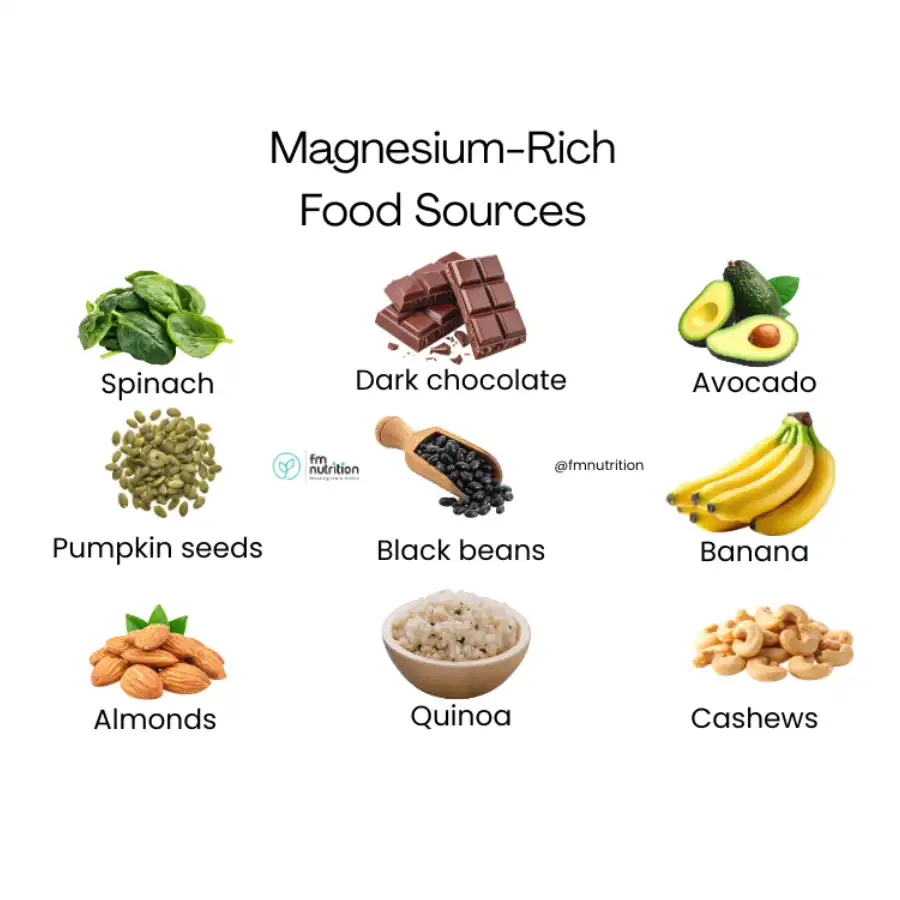
Here is the list of magnesium-rich food sources that can be included in your daily diet. These are some of the best natural sources of magnesium:
- Spinach
- Pumpkin seeds
- Almonds
- Dark chocolate
- Black beans
- Quinoa
- Avocado
- Banana
- Cashews
Bottom Line – Choosing The Right Magnesium Supplements
Anita chose magnesium glycinate for her sleep issues and stress, and within two weeks, she started feeling noticeably better. Like Anita, you now understand magnesium, its different forms, and how to choose the right one based on your symptoms. When you match the correct magnesium type to your needs, you stop guessing and start seeing results.
Choosing the right magnesium supplement truly matters—and it can make a meaningful difference to your health.
So stop guessing, choose the right magnesium supplement, and take charge of your well-being.
Not sure where to start? Browse our magnesium range and choose what fits your needs.
Magnesium Supplements FAQ
Magnesium glycinate is commonly recommended for stress and anxiety. Its calming effect on the nervous system makes it a good option if you’re feeling tense or restless.
Magnesium malate is a great option for muscle cramps and soreness. It supports muscle relaxation and helps with post-exercise recovery.
It depends on your goal. Magnesium citrate is better if you struggle with constipation or slow digestion. Magnesium glycinate is better if you want support for sleep, anxiety, or relaxation.
Most adults need around 310–420 mg of magnesium daily, depending on age and gender. The safe upper limit from supplements is about 350 mg per day unless otherwise directed by a healthcare provider
Common signs include muscle cramps, fatigue, poor sleep, anxiety, irregular heartbeat, or frequent headaches. If you notice several of these, it may be worth checking your magnesium levels.
Yes, magnesium supplements are generally safe for daily use when taken at the recommended dosage. Taking more than you need can cause diarrhea or stomach upset, so stick to the safe limits.
The timing depends on your goal. Magnesium for sleep or anxiety is best taken in the evening, while magnesium for energy or muscle support may be taken earlier in the day. Some people split the dose.
High doses of magnesium—especially magnesium citrate or oxide—may cause diarrhea, bloating, or stomach cramps. Starting with a low dose and choosing a well-absorbed form reduces side effects.
- Fatima G, Dzupina A, B Alhmadi H, et al. Magnesium Matters: A Comprehensive Review of Its Vital Role in Health and Diseases. Cureus. 2024;16(10):e71392. Published 2024 Oct 13. doi:10.7759/cureus.71392
https://pmc.ncbi.nlm.nih.gov/articles/PMC11557730/ - Schwalfenberg GK, Genuis SJ. The Importance of Magnesium in Clinical Healthcare. Scientifica (Cairo). 2017;2017:4179326. doi:10.1155/2017/4179326
https://pmc.ncbi.nlm.nih.gov/articles/PMC5637834/ - Volpe SL. Magnesium in disease prevention and overall health. Advances in nutrition. 2013 May 1;4(3):378S-83S.
https://www.sciencedirect.com/science/article/pii/S2161831322011280 - Pethő ÁG, Fülöp T, Orosz P, Tapolyai M. Magnesium Is a Vital Ion in the Body-It Is Time to Consider Its Supplementation on a Routine Basis. Clin Pract. 2024;14(2):521-535. Published 2024 Mar 22. doi:10.3390/clinpract14020040
https://pmc.ncbi.nlm.nih.gov/articles/PMC10961779/ - National Institutes of Health. Magnesium. National Institutes of Health. Published June 2, 2022.
https://ods.od.nih.gov/factsheets/ - Magnesium-HealthProfessional
Houston, M. (2011). The Role of Magnesium in Hypertension and Cardiovascular Disease. The Journal of Clinical Hypertension, 13(11), 843–847.
https://doi.org/10.1111/j.1751-7176.2011.00538.x - Pickering G, Mazur A, Trousselard M, et al. Magnesium status and stress: The vicious circle concept revisited. Nutrients. 2020;12(12):3672. doi:
https://doi.org/10.3390/nu12123672 - Zain AlShanableh, Ray EC. Magnesium in hypertension: mechanisms and clinical implications. Frontiers in physiology. 2024;15. doi:
https://doi.org/10.3389/fphys.2024.1363975 - Tarsitano, M. G., Quinzi, F., Folino, K., Greco, F., Francesco Pio Oranges, Cerulli, C., & Gian Pietro Emerenziani. (2024). Effects of magnesium supplementation on muscle soreness in different type of physical activities: a systematic review. Journal of Translational Medicine, 22(1).
https://doi.org/10.1186/s12967-024-05434-x - Houston, M. (2011). The Role of Magnesium in Hypertension and Cardiovascular Disease. The Journal of Clinical Hypertension, 13(11), 843–847.
https://doi.org/10.1111/j.1751-7176.2011.00538.x